




Why Is My Hair Getting Thinner?
If you are concerned about progressive thinning, increased shedding, or changes in your scalp, consider scheduling a professional assessment to discuss your hair health and determine the next best steps.
July 18, 2026
By Dr Chung
Beauty Inspire | IYAC Medspa
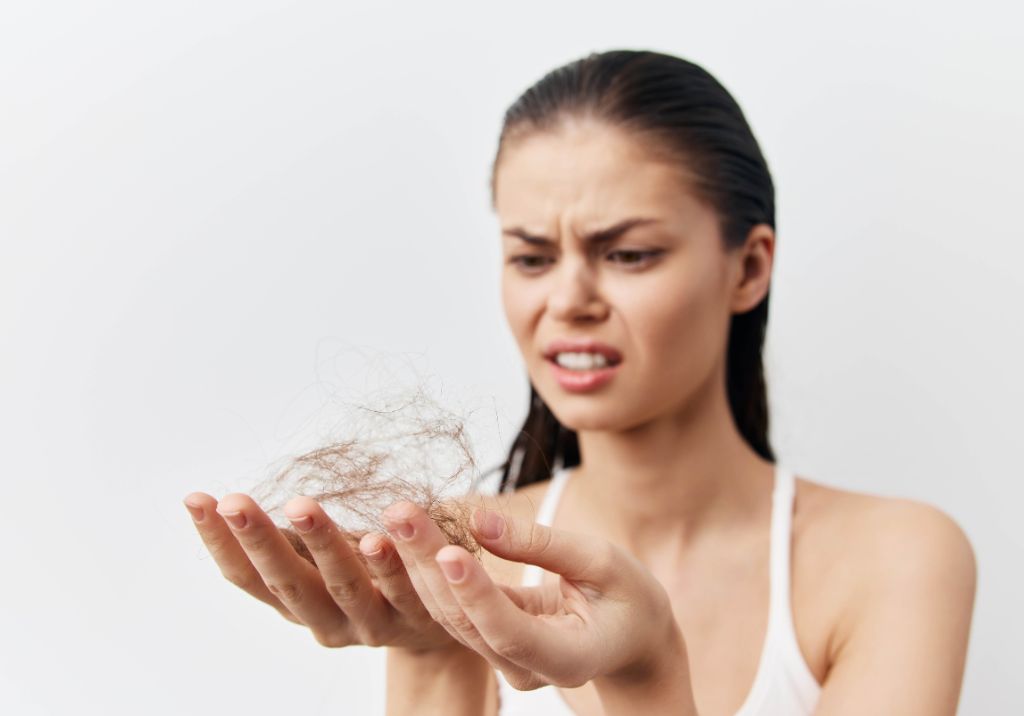
You catch a glimpse of your scalp under bright lighting and realise your parting looks wider than before.
Your ponytail feels thinner. Your hair doesn’t seem to have the same volume it once did.
Naturally, the first thought that comes to mind is: “Is this genetic?”
Although genetics remains one of the most common causes of hair thinning, it is no longer the whole story.
More people are noticing changes in hair density at a younger age than expected. Hair thinning is increasingly linked not only to genetics but also to modern lifestyle causes such as chronic stress, dietary imbalances, hormonal changes, poor sleep, and scalp health.
Hair is surprisingly sensitive to what is happening within the body. In many individuals, thinning develops not because of a single cause, but because several contributing factors overlap over time.
Knowing these factors is often the first step in understanding why your hair may be changing.
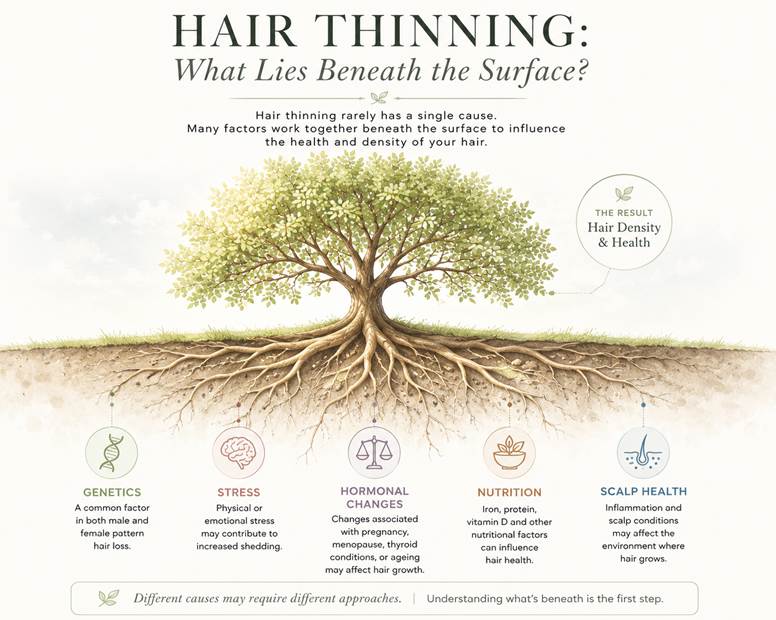
Genetics: The Most Recognised Cause
When people think about hair thinning, genetics is usually the first explanation that comes to mind.
Pattern hair loss affects both men and women and typically develops gradually over time. In men, it often presents as a receding hairline or thinning at the crown. In women, the earliest signs are frequently a widening parting or a gradual reduction in overall hair density.
Because these changes occur slowly, many people only become aware of them when comparing photographs taken several years apart.
Genetics influences how hair follicles behave over time, resulting in progressively finer and shorter hairs. However, genetics is only one part of the story.
Stress: When Life Affects Your Hair
Hair and stress are more closely linked than many people realise.
Significant physical stress, such as surgery, severe illness, rapid weight loss, or recovery from a major medical condition, can disrupt the normal hair growth cycle. Emotional stress also plays a part.
Modern lifestyles often expose us to prolonged stress, poor sleep, irregular eating patterns, and hectic schedules. While these pressures may feel manageable day to day, the body sometimes reflects them in subtle ways, including changes in hair growth and increased shedding.
One of the more frustrating aspects is that increased hair shedding often occurs weeks or even months after the stressful event. By the time the hair fall becomes noticeable, the original trigger may already feel like a distant memory.
This delayed timing explains why many people are surprised to learn that stress has contributed to their hair concerns.
Hormonal Changes: More Common Than Many Realise
Hormones help regulate many functions throughout the body, including hair growth.
Periods of hormonal change are frequently accompanied by changes in hair density. Pregnancy, the postpartum period, menopause, thyroid conditions, and the natural ageing process all influence the hair growth cycle.
Some individuals notice increased shedding, while others experience gradual thinning over time. Hormonal influences often overlap with genetic and lifestyle factors, making the picture more complex than it first appears.
Nutrition: Hair Reflects What Happens Within
Hair is not essential for survival, which means the body prioritises vital organs when nutrients are limited.
As a result, nutritional deficiencies can sometimes become apparent through changes in hair.
Adequate protein intake is important because hair is primarily made of protein. Iron, vitamin D, and other nutrients also support normal hair growth and maintenance.
In today’s fast-paced environment, it is possible to be well-fed but not necessarily well-nourished. Highly processed meals, restrictive dieting, frequent meal skipping, and significant weight loss can all contribute to nutrient gaps that affect hair health over time.
Hair often reflects these internal imbalances before other symptoms become obvious, which is why changes in hair density sometimes provide an early clue that something deeper may need attention.
Scalp Health: The Foundation for Healthy Hair
When discussing hair, it is easy to focus solely on the hair strands themselves and overlook the scalp.
The scalp is the area where hair grows. Conditions that cause inflammation, irritation, excessive oiliness, scaling, or other changes can affect the scalp and the hair follicles it supports.
Just as healthy soil helps a tree thrive, a healthy scalp provides the foundation for healthy hair growth.
This is why evaluating the scalp is often an important part of understanding hair concerns.
It Is Rarely Just One Thing
One of the biggest misconceptions about hair thinning is that there must be a single cause.
In reality, many people experience a combination of contributing factors.
A person with a genetic tendency towards hair thinning may also be dealing with chronic work-related stress. Someone going through menopause may simultaneously have nutritional deficiencies. Another individual may have underlying scalp inflammation contributing to ongoing hair concerns.
This overlap explains why hair thinning can look similar from person to person, even though it arises from very different underlying causes.
Genetics influences susceptibility, but lifestyle factors often determine how strongly and at what age those changes become noticeable.
Why a Professional Hair Assessment Matters
Because hair thinning can arise from several different factors, identifying the underlying cause is an important part of understanding what is happening.
For example, increased hair shedding related to stress, illness, significant weight loss, poor nutrition, or hormonal changes can look very different from pattern hair loss driven by genetic factors. Yet to the individual experiencing it, both situations often appear as the same concern: “My hair is getting thinner.”
A professional hair assessment helps evaluate the pattern of thinning, scalp condition, hair density, and other factors that provide clues about the underlying cause.
Tools such as the TrichoLAB Hair Scan allow for detailed examination of the scalp and hair follicles. By assessing hair density, follicle characteristics, and patterns of hair growth, it becomes easier to distinguish whether the thinning appears more consistent with stress-related shedding, nutritional influences, hormonal factors, pattern hair loss, or a combination of contributing factors.
Rather than assuming every case of hair thinning is genetic, a detailed assessment helps build a clearer picture of what may be contributing to the changes.
The Takeaway
If your hair feels thinner than it used to, genetics is only one possible explanation.
Stress, hormonal changes, nutrition, and scalp health all play important roles in supporting healthy hair growth. In many individuals, several of these factors interact simultaneously.
Hair thinning is rarely a one-size-fits-all issue. Understanding potential contributing factors is often the first step before considering available options for managing hair concerns.
If you are concerned about progressive thinning, increased shedding, or changes in your scalp, consider scheduling a professional assessment to discuss your hair health and determine the next best steps.
This article is intended for educational purposes only and should not be considered medical advice. Individual circumstances vary, and a consultation with a qualified hair professional is recommended for personalised assessment and advice.
On this page
Have Questions?
We are here to help!
Whether you’re ready to book a treatment, have a question about your skin, or simply want to learn more about how we can help you feel your best, we’d love to hear from you. At IYAC Medspa, we take a thoughtful, personalised approach to every client and are here to support you at every step. Please reach out via the form below or give us a call - our friendly team is happy to assist.