


Hair Shedding or Hair Loss? The Tree Analogy
If you are concerned about persistent shedding, noticeable thinning, or scalp changes, consider scheduling a professional assessment to discuss your hair health and determine the next best steps.
May 17, 2026
By Dr Chung
Beauty Inspire | IYAC Medspa
Have you ever noticed a lot of hair collecting near the drain after washing your hair?
Or perhaps you’ve looked in the mirror and felt that your hair isn’t quite as full as it used to be.
For many people, the immediate thought is: “I’m losing my hair.”
But before you panic, it’s worth knowing that not all hair fall is the same. While the terms hair shedding and hair loss are often used interchangeably, they do not mean the same thing.
Understanding the difference can help you make sense of what you’re seeing—and whether it’s simply part of your hair’s natural cycle or worth further investigation.
Your Hair Is Constantly Renewing Itself
Hair growth is not a continuous process. Every strand on your scalp goes through a natural cycle of growth, rest, and renewal.
At any given time, most hairs are actively growing, while others are preparing to shed. This is why finding a few strands on your pillow, in your brush, or on the shower floor is completely normal.
In fact, most people shed some hair every day without noticing any visible change in their overall hair volume.
Problems tend to arise when either more hair than usual begins to shed, or the hair that falls out is not being adequately replaced.
The Simplest Way to Understand the Difference
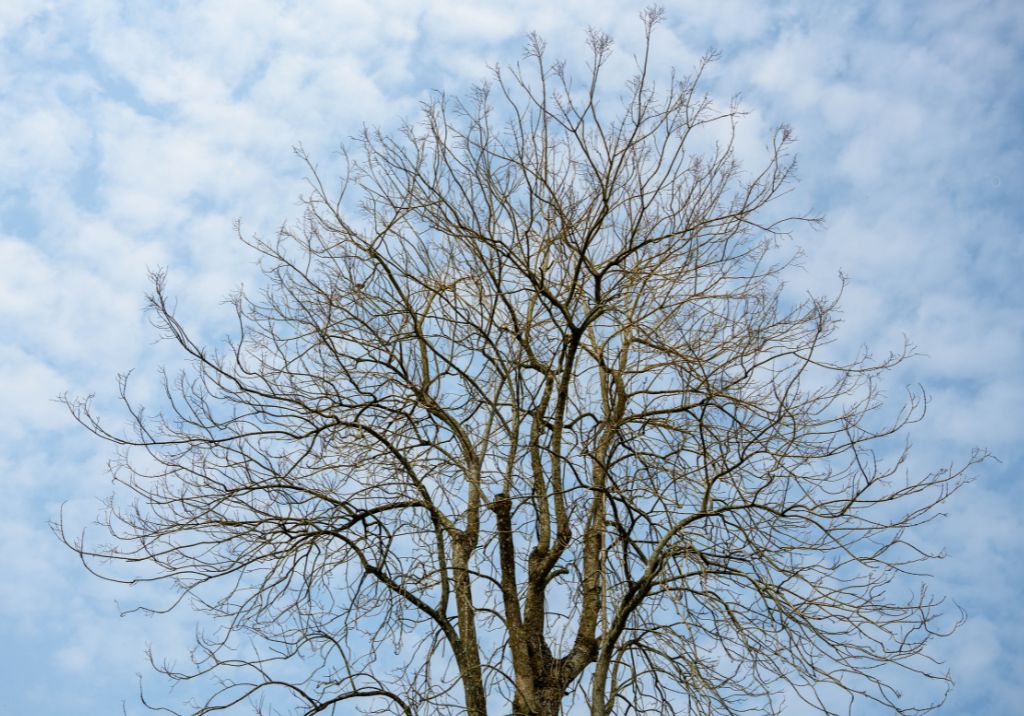
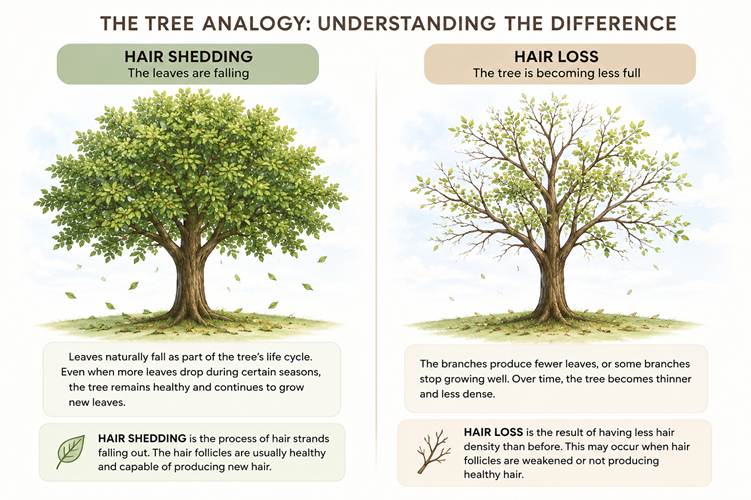
One of the easiest ways to understand hair shedding versus hair loss is to imagine a tree.
Hair shedding is like leaves falling from a healthy tree. Leaves naturally fall as part of the tree’s life cycle, and even when more leaves drop during certain seasons, the tree itself stays healthy and capable of producing new growth.
Hair loss, on the other hand, is like a tree that gradually becomes less full over time. The branches may be producing fewer leaves, or some branches may no longer be growing as well as they once did. The tree’s overall appearance changes.
In this analogy, hair shedding corresponds to leaves falling, while hair loss corresponds to the tree becoming less dense.
The two can occur separately or together.
What Is Hair Shedding?
Hair shedding refers to the process of hair strands falling out from the scalp.
Sometimes this happens as part of the normal hair cycle. At other times, the body may temporarily shift more hairs into the shedding phase due to significant physical or emotional stress, such as high fever, major surgery, childbirth, rapid weight loss, nutritional deficiencies, or an especially stressful period.
Many people notice increased hair fall weeks or even months after the triggering event, such as on their pillow, in the shower, or in their hairbrush.
While this can understandably be worrying, increased shedding does not necessarily mean permanent hair loss. In many cases, the hair follicles remain healthy and capable of producing new hair.
What Is Hair Loss?
Hair loss refers to a drop in overall hair density or volume.
Rather than noticing large amounts of hair falling out each day, some individuals notice that their hair looks thinner than before. Their ponytail may feel less substantial, their parting may appear wider, or more scalp may become visible under harsh lighting.
Hair loss can occur for a variety of reasons. One of the most common causes is pattern hair loss, often genetically linked, which affects both men and women and tends to develop gradually. Other scalp and hair conditions, such as chronic fungal infections, may likewise contribute to thinning.
Unlike temporary shedding, hair loss involves changes affecting the hair follicles themselves.
Why People Often Confuse the Two
The confusion is understandable, as hair shedding and hair loss often overlap.
Someone who experiences excessive shedding for several months may eventually notice a reduction in hair volume. Likewise, a person with underlying hair thinning may become more aware of it during a temporary shedding episode.
This is why simply counting the number of hairs that fall out is not always enough to understand what is happening.
A person can shed a significant amount of hair yet maintain good overall density, while another may notice very little hair fall but still experience progressive thinning over time.
So, What Should You Look Out For?
Hair shedding is usually more noticeable because of the amount of hair you see falling out. Hair loss is often recognised by changes in how your hair looks or feels.
You may wish to pay closer attention if you notice persistent excessive shedding over several months, a widening hair part, progressive thinning, a receding hairline, patchy areas of hair loss, or scalp changes such as redness, irritation, or flaking.
Because hair health is affected by genetics, hormonal changes, nutrition, medical conditions, and lifestyle habits, identifying potential contributing factors is an important first step.
Looking After Your Hair
While not every cause of hair shedding or hair loss can be prevented, optimising overall health supports healthy hair growth.
A balanced diet with adequate protein and essential vitamins, good scalp care habits, and avoiding excessively restrictive dieting all have a role in supporting hair and scalp wellness. Managing stress also supports general well-being.
It is also important to remember that healthy-looking hair starts under the surface. Changes in hair density can sometimes reflect root factors that are not immediately obvious.
The Takeaway
If there is one thing to remember, it is this:
Hair shedding is the process by which hair strands fall out. Hair loss is the result of having less hair density than before.
Recall the tree analogy: hair shedding is like leaves falling, while hair loss is the tree becoming less full over time.
If you are concerned about persistent shedding, noticeable thinning, or scalp changes, consider scheduling a professional assessment to discuss your hair health and determine the next best steps.
This article is intended for educational purposes only and should not be considered medical advice. Individual circumstances vary, and a consultation with a qualified hair professional is recommended for personalised assessment and advice.
On this page
Have Questions?
We are here to help!
Whether you’re ready to book a treatment, have a question about your skin, or simply want to learn more about how we can help you feel your best, we’d love to hear from you. At IYAC Medspa, we take a thoughtful, personalised approach to every client and are here to support you at every step. Please reach out via the form below or give us a call - our friendly team is happy to assist.