



Hair Loss Myths: Fact or Fiction?
Hair health is influenced by a combination of genetics, hormones, nutrition, stress, scalp health, sleep, and lifestyle factors.
October 18, 2025
By Dr Chung
Beauty Inspire | IYAC Medspa
Search online for hair loss advice and you’ll quickly find conflicting opinions.
Wash your hair less.
Buy a different shampoo.
Stress doesn’t affect hair.
It’s all genetic anyway.
While some of these claims contain a grain of truth, many are myths that have been repeated so often they sound like facts.
Let’s separate fact from fiction.
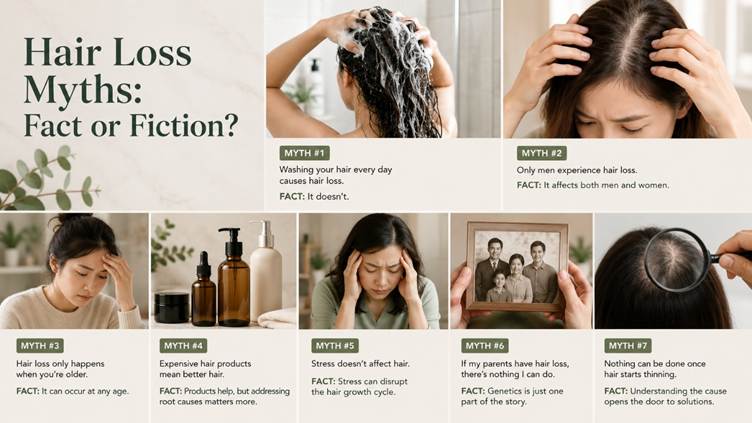
Myth #1: Washing Your Hair Every Day Causes Hair Loss
Seeing hair strands in the shower can be alarming, but shampooing itself does not usually cause hair loss.
What you’re seeing are often hairs that have already reached the natural shedding phase. Washing simply makes them more noticeable.
In Singapore’s hot and humid climate, daily shampooing is appropriate for most people. Regular cleansing removes sweat, excess oil, pollutants, and product build-up, helping to maintain a healthier scalp environment.
Ironically, reducing washing frequency out of fear can sometimes lead to oiliness, irritation, flaking, or scalp inflammation.
For most people, daily scalp cleansing is perfectly reasonable and is not a cause of hair loss.
Myth #2: Only Men Experience Hair Loss
Hair thinning affects both men and women.
In women, it often presents differently. Rather than obvious bald patches, many notice a widening parting, reduced volume, or gradual thinning across the crown.
Because these changes are subtle and progressive, they can go unnoticed for years.
Genetics, hormones, stress, nutrition, and age-related changes can influence hair growth in both sexes.
Myth #3: Hair Loss Only Happens When You’re Older
Hair thinning is not exclusively an age-related issue.
Many people first notice changes in their late 20s or 30s, particularly during periods of stress, after rapid weight loss, or following major life events.
Hair health reflects a combination of genetics, hormones, nutrition, stress, sleep quality, scalp health, and overall wellbeing.
Nutritional factors are particularly important. Iron deficiency is a common contributor to hair thinning, particularly among women of reproductive age. Low vitamin D levels are also frequently identified, even in sunny Singapore where deficiency remains surprisingly common despite year-round sunshine.
Postpartum hair shedding is another common example. While many women recover naturally, persistent thinning beyond the first year deserves further evaluation rather than being dismissed as “just postpartum hair loss.”
Myth #4: Expensive Hair Products Mean Better Hair
When hair starts thinning, many people focus on finding the right shampoo, serum, or scalp treatment.
While quality products can support scalp health, they are not a universal solution.
The effectiveness of any hair care routine depends on whether it addresses the underlying factors contributing to the thinning. Stress-related shedding, nutritional deficiencies, hormonal changes, scalp inflammation, and pattern hair loss all require different approaches.
Products can play a valuable supporting role, but understanding why the hair is thinning remains just as important as deciding what to apply to it.
Myth #5: Stress Doesn’t Affect Hair
Stress and hair health are closely linked.
Physical stressors such as illness, surgery, rapid weight loss, or recovery from a medical condition can disrupt the normal hair growth cycle. Emotional stress can have similar effects.
One challenge is that increased shedding often appears weeks or months after the triggering event, making the connection easy to miss.
Chronic stress, poor sleep, demanding schedules, and irregular eating habits can all influence hair growth over time.
Myth #6: If My Parents Have Hair Loss, There’s Nothing I Can Do
Genetics plays an important role in many forms of hair thinning, particularly pattern hair loss.
However, genetics is only part of the story.
Hormones, nutrition, stress, sleep quality, scalp health, and lifestyle factors all influence how hair behaves over time. This is why two people with similar family histories can experience very different outcomes.
Rather than assuming genetics is the sole explanation, it is often worth exploring other contributing factors.
Myth #7: Nothing Can Be Done Once Hair Starts Thinning
Perhaps the most discouraging myth is that hair thinning is simply something you have to accept.
In reality, hair thinning is a sign that something is affecting the normal hair growth cycle.
Stress-related shedding differs from nutritional deficiencies. Hormonal thinning differs from scalp inflammation or pattern hair loss.
Understanding the cause is often more important than focusing solely on the symptom.
Why Understanding the Cause Matters
Hair thinning is rarely caused by a single factor.
Someone with a genetic predisposition may also be experiencing chronic stress. A woman going through menopause may simultaneously have nutritional deficiencies. Another person may have scalp inflammation contributing to ongoing shedding.
Because multiple factors often overlap, identifying the underlying contributors is key.
Tools such as the TrichoLAB Hair Scan can provide an objective assessment of hair density, scalp condition, and growth patterns. This helps build a clearer picture of whether the changes are more consistent with stress-related shedding, nutritional influences, hormonal factors, pattern hair loss, or a combination of causes.
The Takeaway
Hair loss myths are common, but hair thinning is rarely as simple as washing too often, using the wrong shampoo, or getting older.
Hair health is influenced by a combination of genetics, hormones, nutrition, stress, scalp health, sleep, and lifestyle factors. Understanding these influences is often the first step towards understanding what may be happening to your hair.
If you are concerned about progressive thinning, increased shedding, or changes in your scalp, consider a professional assessment to better understand the factors involved.
This article is intended for educational purposes only and should not be considered medical advice. Individual circumstances vary, and a consultation with a qualified hair professional is recommended for personalised assessment and advice.
On this page
Have Questions?
We are here to help!
Whether you’re ready to book a treatment, have a question about your skin, or simply want to learn more about how we can help you feel your best, we’d love to hear from you. At IYAC Medspa, we take a thoughtful, personalised approach to every client and are here to support you at every step. Please reach out via the form below or give us a call - our friendly team is happy to assist.